Autonomous robots and drones answer a real labour shortage on small and mid-scale row-crop farms, but adoption stalls on a trust gap: the machines behave as black boxes, and when one stops in the field the operator has no way to see why. The bottleneck is no longer the hardware — it is the distance, physical and digital, between the farmer and the machine.
Future Farming XR closes that distance. It is a single immersive interface, running on Meta Quest headsets, that combines farm monitoring, autonomous fleet management, and remote intervention: the operator can watch the field, understand an anomaly in plain language, and virtually step into the driver’s seat to resolve it without travelling out to the machine.
Built with the Maroon Robotics Team at Mississippi State University for the 2026 Farm-ng student design competition, Division I.
Platform architecture
The ecosystem is organised as four layers, each with defined responsibilities and interfaces — the farm and hardware layer, the network layer, the data and orchestration layer, and the interface layer.
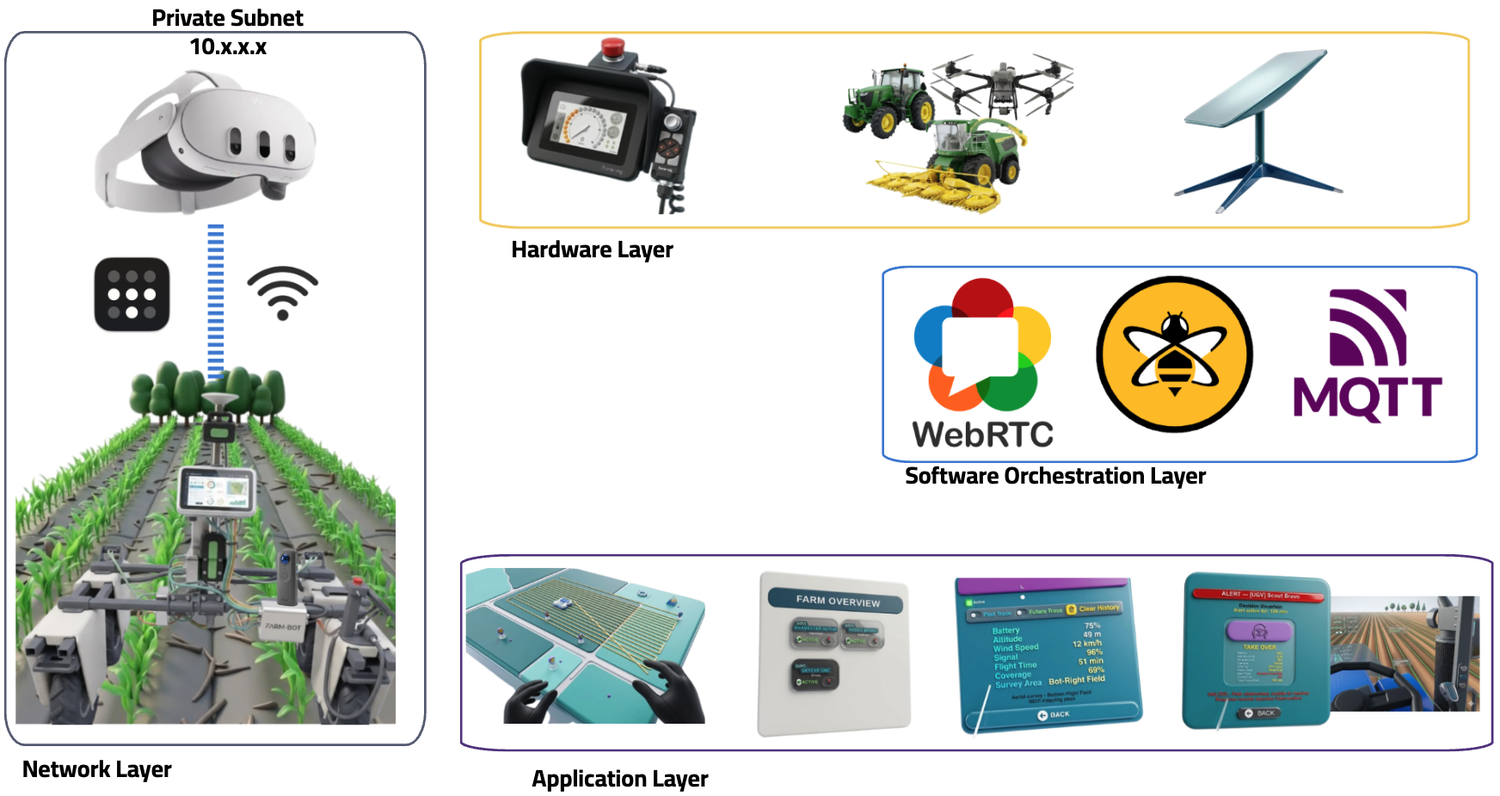
The interface layer itself splits three ways by what the operator is doing: a strategic view for planning and whole-farm awareness, a tactical view for supervising and taking over an individual machine, and a safety layer that governs handoff between them.
Supervising a fleet
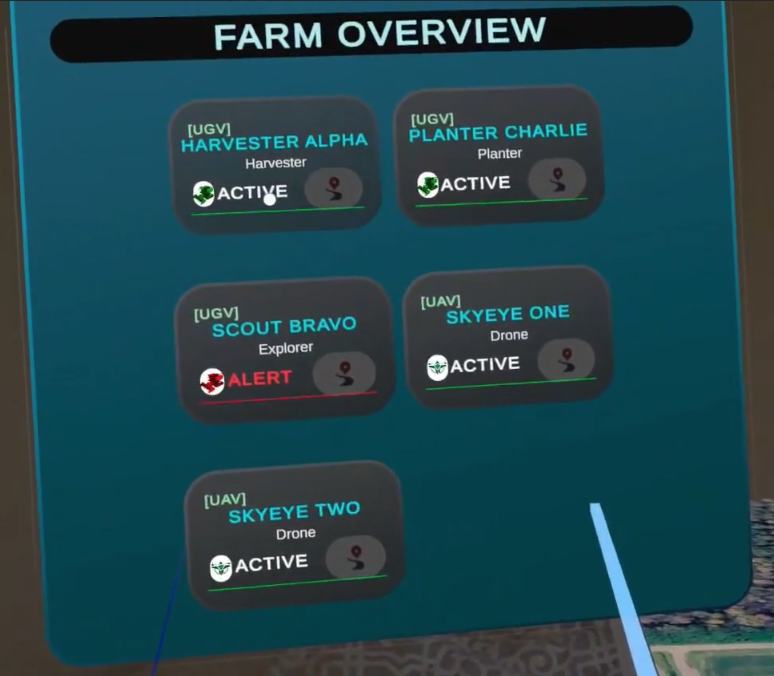
The dashboard puts every vehicle, its task, and its status in one view, so a single operator can hold situational awareness across several machines at once.
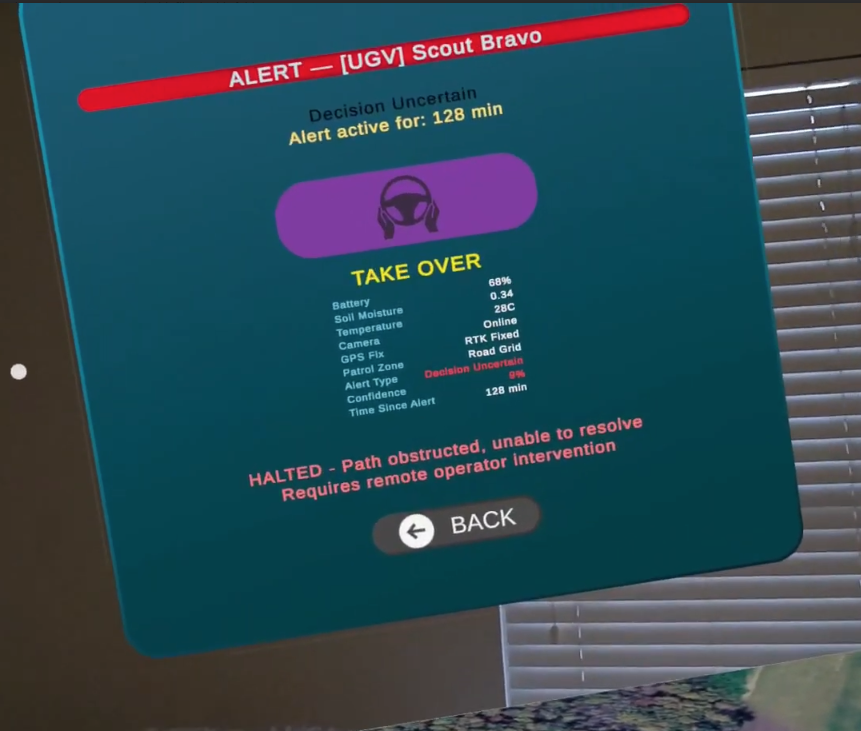
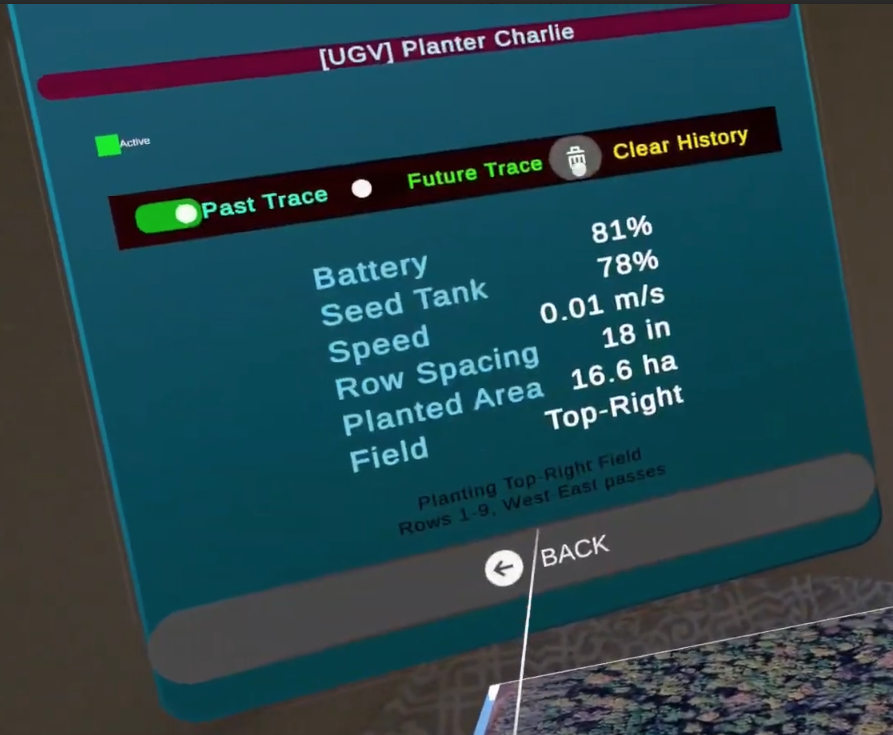
When a machine raises an anomaly, an alert panel explains what happened in plain language rather than a fault code, and offers the operator a decision.
Stepping into the machine
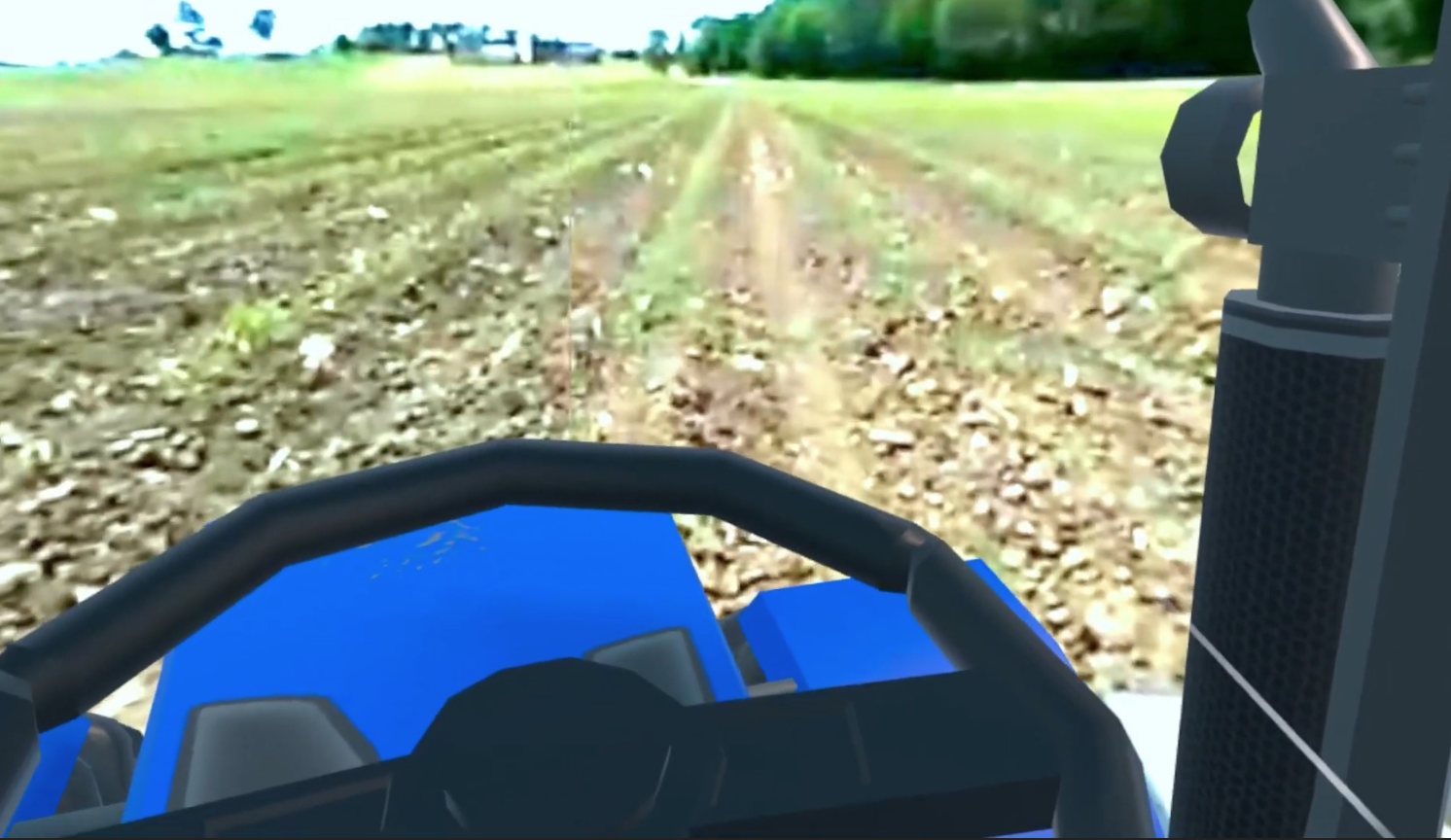
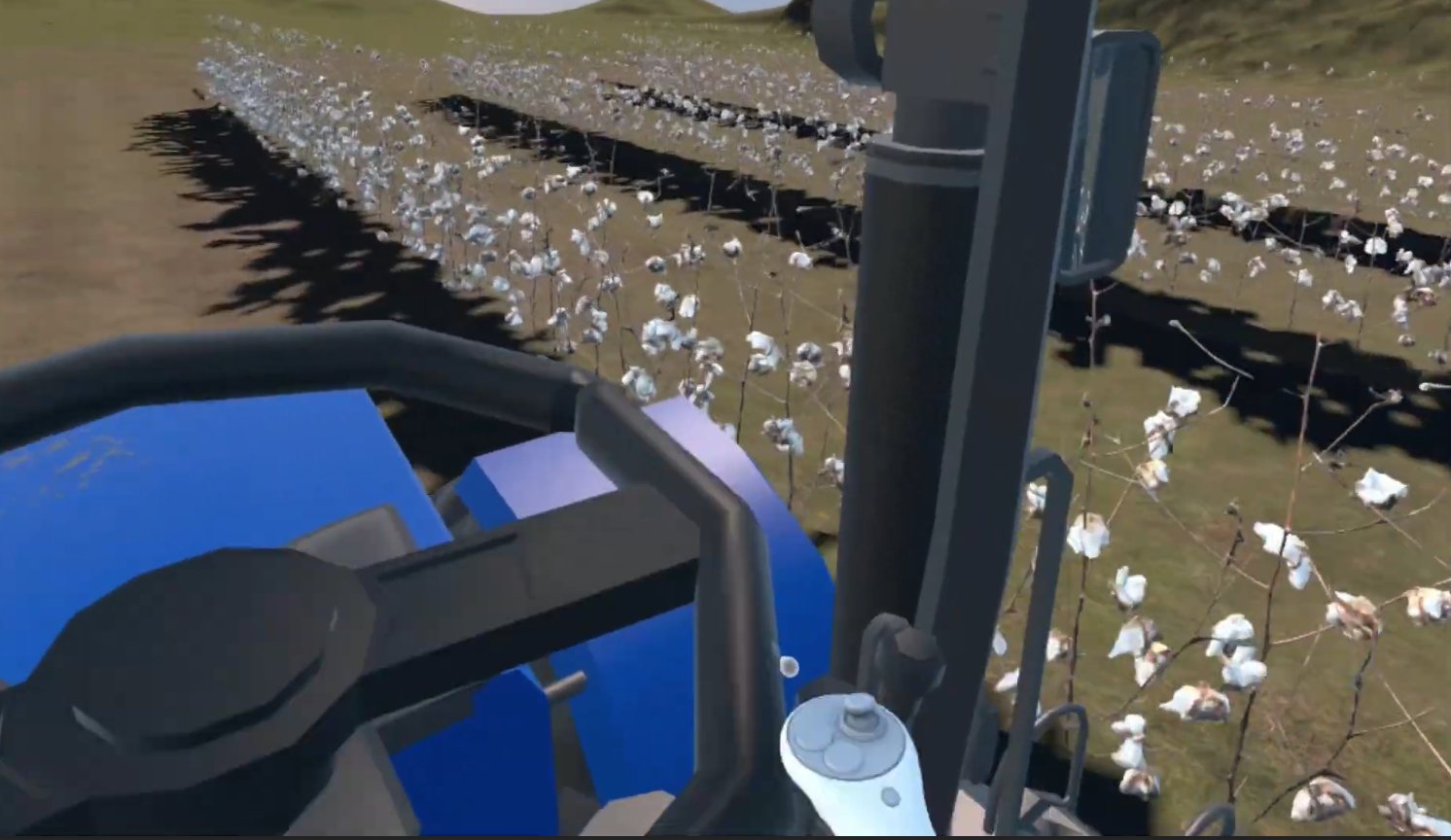
From an alert the operator can drop into a telepresence view of the vehicle and drive it directly, with a 360° view of the robot’s surroundings.
A simulated cabin gives the same controls for training and rehearsal, so an operator can build confidence before touching a real machine in a real field.
What the evaluation showed
Three metrics were tested against the original proposal, using a structured survey of five active Mississippi row-crop farmers, field testing on the Farm-ng Amiga, and latency measurements across the communication pipeline:
- Operator confidence. Baseline confidence in autonomous equipment averaged 6.0 out of 10. After exposure to monitoring plus remote takeover, confidence averaged 76 out of 100. Every respondent rated supervising multiple machines at once as very or extremely useful.
- Remote operation accessibility. Targeted onboarding under 45 minutes for operators with no prior VR or robotics experience.
- System responsiveness. Targeted sub-200 ms video latency and sub-500 ms telemetry latency, since perceptible lag between input and response is itself a destroyer of operator trust.
Full method, results, and discussion are in the report above.
The team
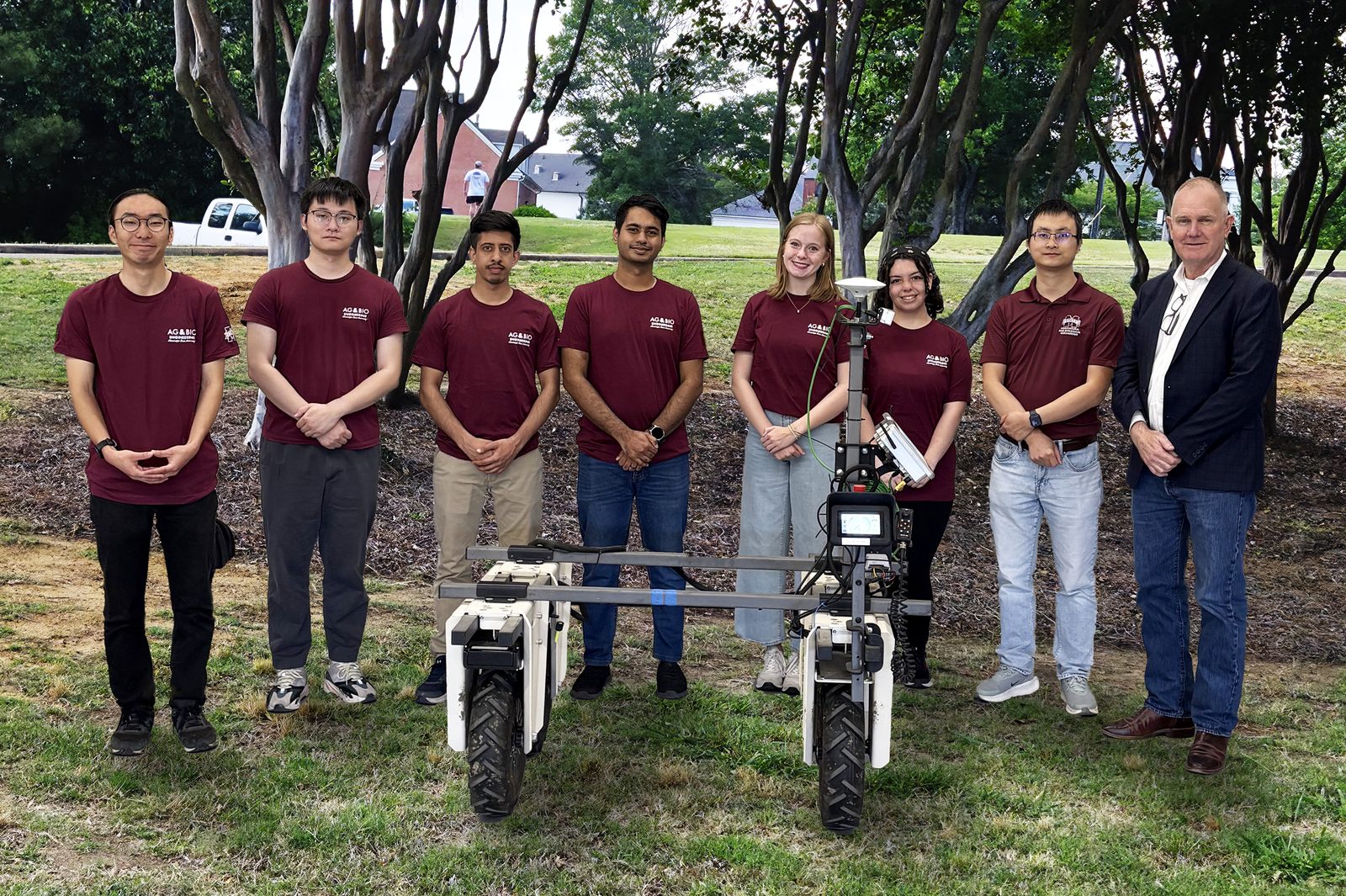
Advised by Dr. Dong Chen and Dr. Alex Thomasson. Team: Moeen Ul Islam, Bishal Adhikari, Cheng Ouyang, Kodia Watanabe, Emma Lovell, Lorien Harvey, Eliana Wile, and Mason Jones.